Chicago winters get all the attention, but anyone who has sat in traffic on I-90 in July knows how brutal Midwest summers can be. As temperatures climb, the sun turns your vehicle into a rolling greenhouse. Standard air conditioning often struggles to keep up, leaving you sweating through your commute and gripping a scalding steering wheel.
When local drivers search for the best window tint chicago has to offer to combat sweltering heat, one technology consistently stands out: ceramic window tint. Beyond simply darkening your glass, high-performance ceramic film delivers unmatched solar control.
Here is everything you need to know about the window tinting benefits of ceramic technology, how it compares to standard films, and what you need to consider before upgrading your ride.
What is Ceramic Window Tint?
Unlike traditional window films that rely on dyes or metal particles to block light, ceramic window tint is engineered using non-metallic, non-conductive ceramic nanoparticles. These microscopic particles are invisible to the naked eye, allowing the film to remain optically clear while selectively blocking heat-generating light rays.
Because ceramic film contains zero metal, it will never interfere with your vehicle’s electronics, mobile signal, GPS navigation, or satellite radio—a crucial advantage for modern tech-focused vehicles.
Top Benefits of Ceramic Window Tint for Summer Driving
Upgrading your vehicle with ceramic film transforms your summertime driving experience in several key ways:
- Maximum Infrared Heat Rejection: Ceramic film acts as an advanced heat rejection tint, blocking up to 90% or more of infrared (IR) heat. This keeps your cabin significantly cooler, even when parked in direct sunlight.
- Essential UV Protection: Broad-spectrum UV rays damage both your skin and your car's interior. Ceramic film provides 99% uv protection car windows, helping prevent skin aging and stopping your leather, vinyl, and dashboard from cracking or fading.
- Reduced AC Strain & Better Fuel Efficiency: Because your cabin stays cooler, your air conditioning system doesn’t have to work as hard. This reduces engine strain and improves fuel economy or electric vehicle (EV) battery range.
- Glare Reduction Without Obscuring Vision: Blinding glare from sunlight or headlights can cause eye fatigue. Ceramic film cuts down glare while maintaining high clarity during day and night driving.
- Shatter Resistance: Ceramic tint adds an extra layer of structural integrity to your glass, holding shattered glass together in the event of an impact or attempted break-in.
Ceramic Tint vs. Regular Tint: What’s the Difference?
When evaluating ceramic tint vs regular, the primary difference comes down to science and performance:
- Dyed Tint (Standard): Uses layers of dye to absorb solar energy and darken glass. While inexpensive, dyed tint offers minimal heat rejection, fades to a purplish color over time, and degrades quickly under intense sun exposure.
- Metallic Tint: Uses microscopic metal particles to reflect heat. While better at heat rejection than dyed film, it causes significant interference with cell phones, GPS, and tire pressure monitoring systems.
- Ceramic Tint: Combines the best of all worlds. It offers supreme heat rejection, zero signal interference, superior clarity, and unmatched durability without fading or changing color over time.
Navigating the Legal Tint Limit in Illinois
Before booking an appointment with local installers, it is important to understand the legal tint limit illinois enforces to ensure your vehicle remains road-legal:
- Passenger Cars: Illinois law generally permits up to 35% Visible Light Transmission (VLT) on all side and rear windows. Alternatively, if the rear windows are darker than 35%, the front side windows must allow at least 50% VLT.
- Trucks, SUVs, and Vans: Front side windows allow up to 35% VLT. Windows behind the driver can be as dark as desired.
- Windshield: Tint is only permitted on the top portion of the windshield, down to the AS-1 line or the top 6 inches.
Choosing a reputable professional ensures you receive a high-performance tint that complies fully with state regulations.
Understanding Ceramic Tint Cost
When researching the ceramic tint cost, expect a higher initial price point compared to basic dyed films.
While standard window tinting may cost less upfront, ceramic tinting represents a premium upgrade due to its advanced material science and complex manufacturing process. The total price varies depending on your vehicle size, the number of windows being treated, and whether you choose full perimeter coverage plus windshield heat rejection.
Despite the higher upfront cost, ceramic tint pays for itself over time through improved comfort, reduced interior wear, fuel savings, and a lifetime performance guarantee that outlasts cheaper alternatives.
Finding the Best Tint Shops in Chicago
Proper installation is just as critical as selecting high-grade film. When searching for auto window tinting near me, look for established tint shops in chicago that feature clean, climate-controlled installation bays and certified technicians.
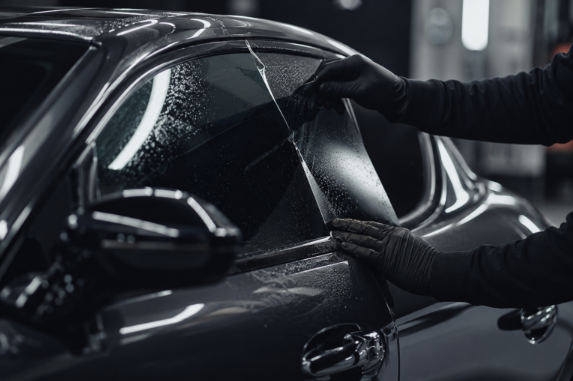
Professional installers ensure precision plot-cutting, seamless edge wrapping, and bubble-free application—giving your vehicle a sleek, factory-installed finish that keeps you cool for summers to come.